Professional pest control services Baton Rouge homeowners rely on establish an exterior chemical barrier and targeted structural exclusion to arrest infestations driven by extreme Gulf Coast humidity. Local properties face constant biological pressure from subterranean termites nesting in river-silt soil, American cockroaches seeking shelter during torrential summer storms, and commensal rodents infiltrating raised foundations.
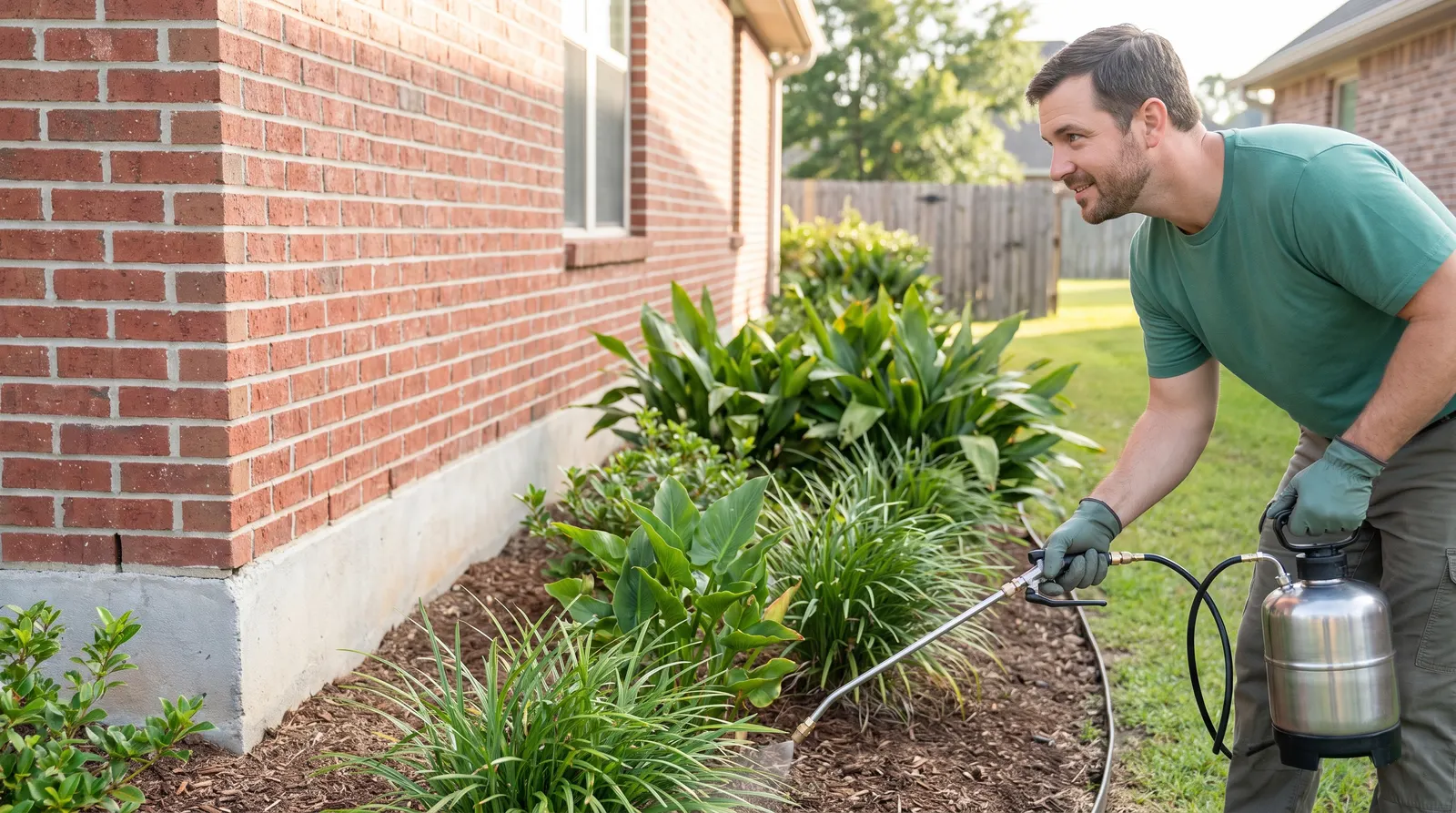
Pest control services company in Baton Rouge is an integrated pest management and structural extermination operation that eliminates wood-destroying insects, disease-carrying rodents, and sub-tropical pests throughout East Baton Rouge Parish properties.
Every service reflects the same meticulous attention to detail, whether it's a single job or a larger pest control services project across Baton Rouge.
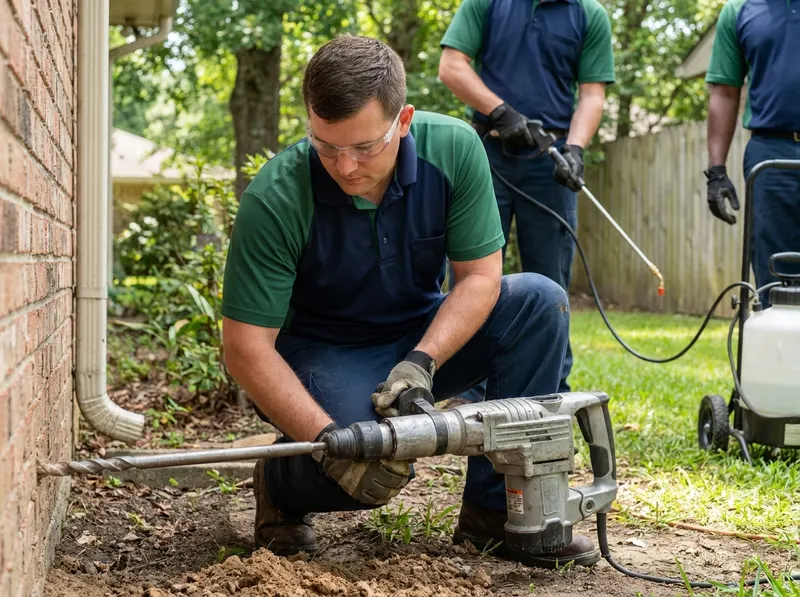
Subterranean termite soil treatment applies liquid non-repellent termiticides directly into the earth surrounding foundation slabs, piers, and utility penetrations. Technicians dig trenches 6 inches wide by 6 inches deep along all exterior perimeter foundation walls and rod-inject termiticide formulations containing fipronil or imidacloprid down to the top of the footing. For attached concrete slabs, driveways, carports, and brick-ledge porches, technicians drill vertical holes through the concrete at 12-inch intervals, pump chemical fluid at the label rate of 4 gallons per 10 linear feet per foot of depth, and seal holes with hydraulic cement plugs. The non-repellent chemistry binds directly to alluvial clay and silt particles, allowing foraging native subterranean termites (Reticulitermes flavipes) and Formosan subterranean termites (Coptotermes formosanus) to pass through the zone undetected. As worker termites groom and feed nestmates through trophallaxis, the active molecule transfers across the subterranean colony, resulting in total structural colony collapse within 90 days. This intervention provides an unbroken toxic barrier that halts cellulose consumption without dispersing termites to adjacent untreated structural members.
Get a quote →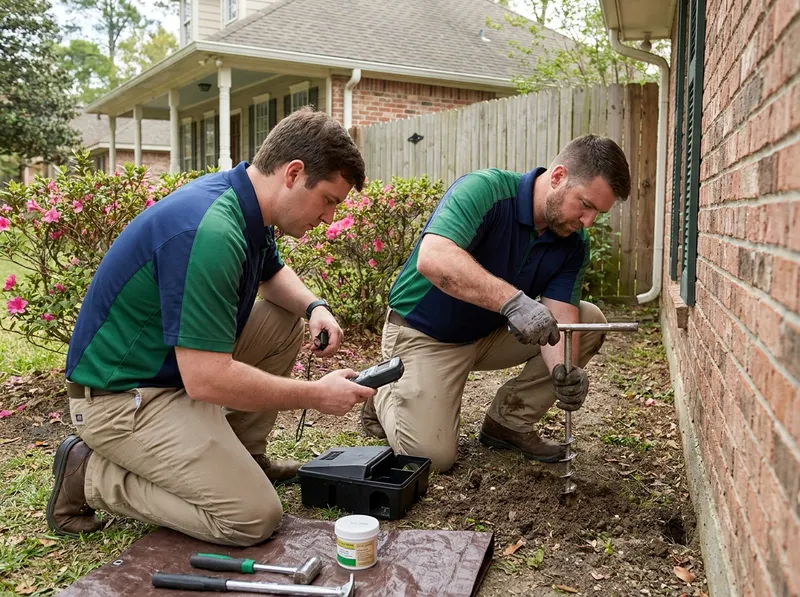
Termite bait station installation places low-profile monitoring cylinders flush with the turf line at 10 to 20-foot intervals around the entire drip line of the roof. Stations contain cellulose monitoring matrices that are physically checked on an established schedule for foraging subterranean termites. Upon detection of active Formosan or native subterranean termite workers, monitoring rods are replaced with dense bait matrices impregnated with chitin synthesis inhibitors such as noviflumuron or hexaflumuron. Worker termites consume the matrix and distribute it throughout the subterranean galleries. The active ingredient prevents termites from synthesizing chitin during their natural molting phases, causing systemic mortality across all life stages, including the secondary reproductives and the queen. This methodology eliminates subterranean colonies without requiring invasive interior drilling or hundreds of gallons of chemical solution injected into saturated soil beds. It serves as an environmentally stable solution on river-adjacent properties where high water tables or complex drainage systems prevent continuous chemical trench applications.
Get a quote →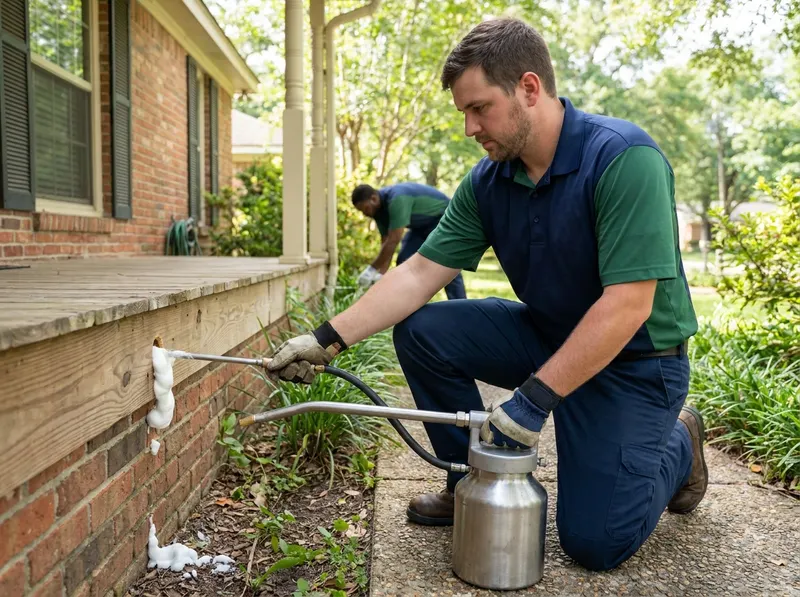
Formosan termite spot foaming delivers pressurized, precision dry or expanding foam directly into structural wall cavities, plumbing chases, and aerial carton nests where active colonies feed on timber framing. Formosan termites uniquely construct moisture-retaining carton nests from soil, chewed wood, and saliva, enabling them to survive above ground inside walls, attics, and flat-roof voids without returning to the soil for hydration. Technicians locate active infestation galleries using non-destructive acoustic sensors and thermal imaging cameras that detect thermal anomalies produced by termite metabolic activity. Small entry ports measuring 1/8 inch are drilled directly into infested stud bays, baseboards, or ceiling plates. An expanding foam carrier formulated with non-repellent fipronil expands at an expansion ratio between 15-to-1 and 30-to-1, thoroughly coating carton structures and gallery chambers. The foam breaks down into a thin chemical film, transferring the termiticide through contact across the population inside structural framing members that conventional soil trenches cannot reach.
Get a quote →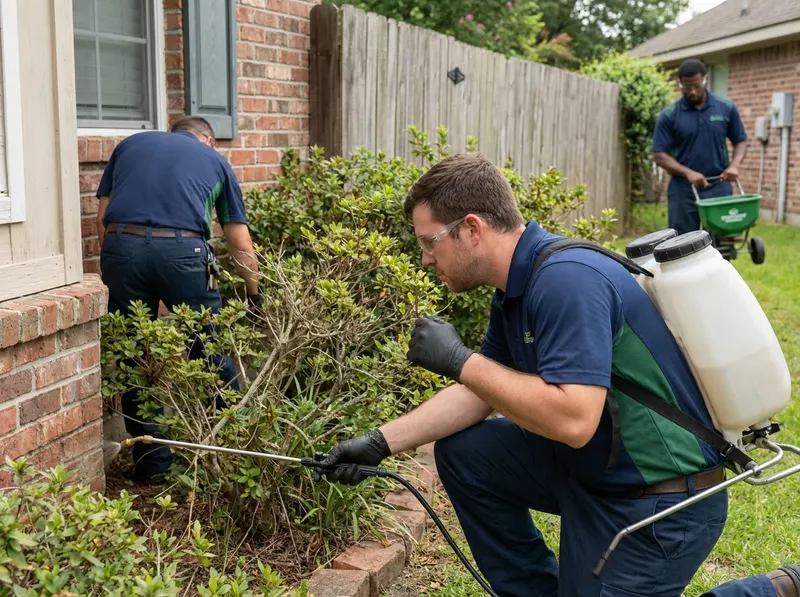
Quarterly perimeter pest defense creates an exterior chemical barrier around the physical perimeter of residential structures to prevent insect ingress without requiring interior treatments. Technicians apply microencapsulated synthetic pyrethroids or suspension concentrates 3 feet up the exterior brick, vinyl, or stucco siding and 3 feet out onto the soil, mulch, or concrete perimeter walkways. Specialized backpack equipment delivers uniform droplet distribution that bonds to rough exterior textures and withstands high ultraviolet index exposure and torrential Gulf Coast rains. The service includes the application of granular insect growth regulators to landscaped mulch beds, de-webbing of soffits and eaves up to 20 feet using telescoping extension poles to remove spider webs and wasp nests, and the injection of residual insecticidal dust into weep holes and foundation expansion joints. This exterior-focused protocol prevents seasonal migrations of smokybrown cockroaches, American cockroaches, black crazy ants, and Argentine ants into living spaces.
Get a quote →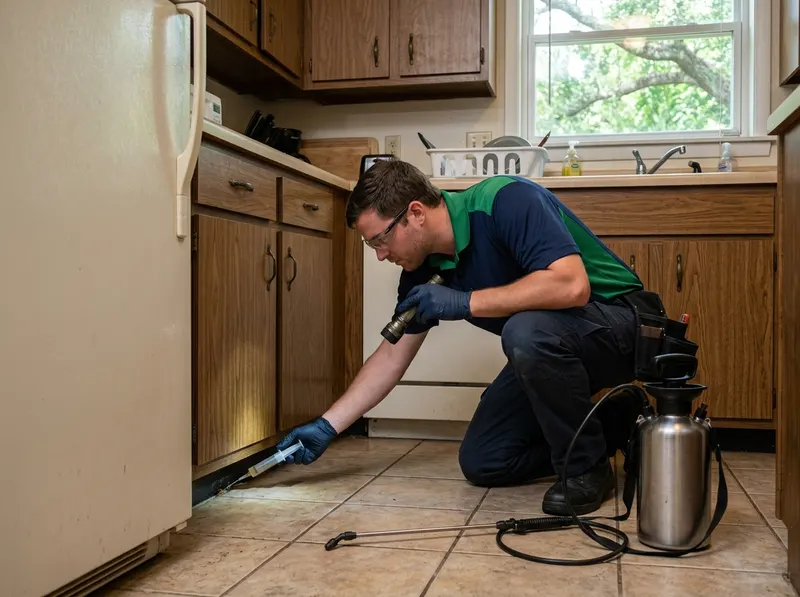
German cockroach cleanout service targets aggressive, indoor-breeding Blattella germanica populations nesting inside kitchens, bathrooms, and food storage zones. Technicians execute a two-phase protocol that avoids repellent baseboard spraying, which causes populations to scatter deeper into wall cavities and electronic motors. The initial phase involves applying targeted non-repellent gel baits containing indoxacarb or dinotefuran into cabinet hinges, underside drawer tracks, electrical outlet boxes, and refrigerator compressor housings. Technicians apply micro-fine insect growth regulator (IGR) dusts containing pyriproxyfen into wall voids and hollow plumbing chases using precision bulb dusters. The insect growth regulator halts nymphal development and induces adult sterility, halting the rapid 28-day reproductive cycle. A follow-up inspection and secondary targeted placement are conducted 14 to 21 days later to target newly hatched nymphs from surviving oothecae before they attain sexual maturity, securing complete eradication in high-moisture residential environments.
Get a quote →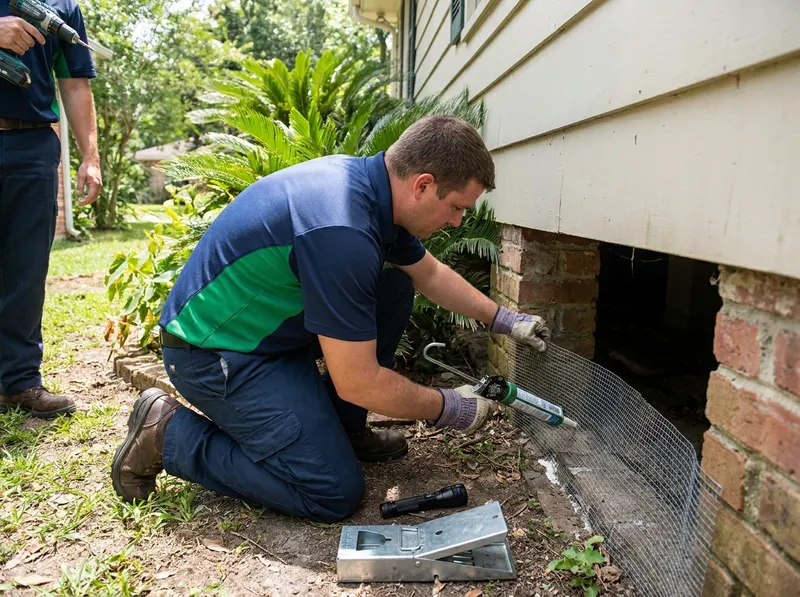
Rodent trapping and structural exclusion provides a complete mechanical defense strategy against roof rats (Rattus rattus) and Norway rats (Rattus norvegicus) that infiltrate residential attics, crawlspaces, and wall cavities. Technicians conduct a physical inspection of the architectural envelope, identifying every gnaw mark, grease rub line, and ingress breach exceeding 1/4 inch in diameter. Technicians seal roof returns, gable vents, weep holes, plumbing stub-outs, and AC refrigerant chases using 1/4-inch heavy-gauge galvanized steel hardware cloth, structural silicone sealants, and copper mesh packed into tight recesses. Concurrently, an intensive internal trapping sequence utilizing heavy-duty snap traps secured within tamper-resistant enclosures is established along attic run-lines and structural wall plates. Traps are monitored, cleared, and reset until zero activity is recorded. This exclusion protocol eliminates commensal rodent populations permanently without deploying loose interior poisons that result in odor contamination from decaying carcasses inside inaccessible wall bays.
Get a quote →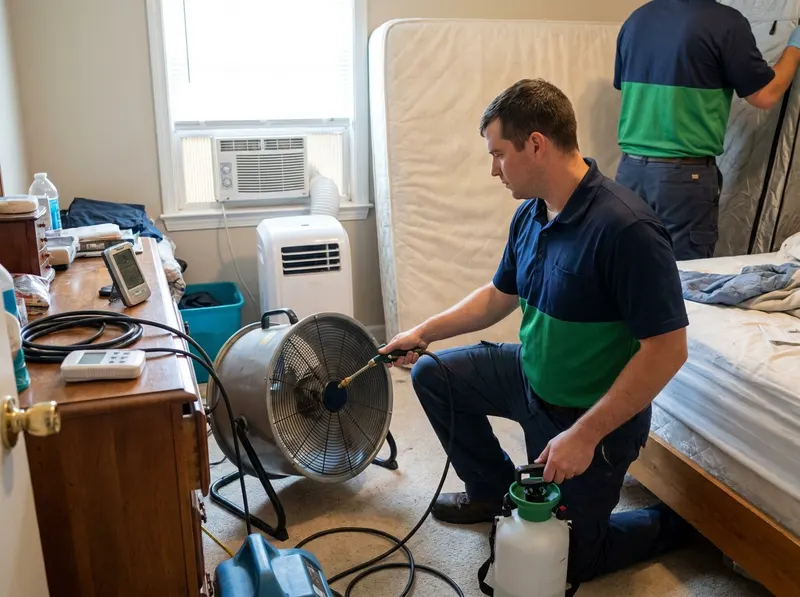
Bed bug heat and chemical remediation delivers systemic eradication of Cimex lectularius populations from mattresses, box springs, headboards, baseboards, and deep structural wall cracks. Technicians deploy a dual-stage protocol tailored to structural framing and soft furnishings. In targeted zones, high-temperature forced-air structural heaters raise room ambient temperatures to a lethal threshold between 122°F and 135°F, maintaining that temperature for a minimum of 4 hours while utilizing high-velocity axial fans to circulate thermal energy into mattress seams, structural joints, and wall voids to eliminate adult insects, nymphs, and eggs through thermal dehydration. In conjunction with or as an independent application, technicians apply long-residual microencapsulated insecticides and amorphous silica gel dust into electrical faceplates, hollow bed frames, baseboard joints, and carpet tack strips. Silica dust physically strips the waxy protective cuticle layer from the insect's exoskeleton, causing desiccation within 48 to 72 hours and ensuring that surviving bed bugs or late-hatching eggs cannot re-establish an infestation.
Get a quote →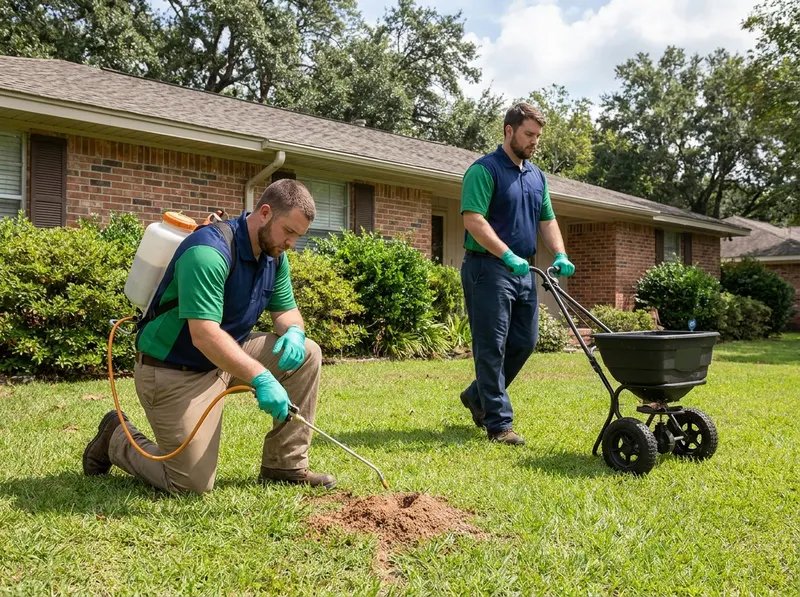
Fire ant mound injection and turf broadcast controls red imported fire ants (Solenopsis invicta) across residential acreage, turfgrass, and landscaping borders. Technicians utilize two complementary treatment methodologies based on yard topology and colony density. For active colonies posing immediate sting hazards near patios, entryways, or AC condensers, technicians inject high-volume liquid termiticides or fast-acting pyrethroids directly into the central core of the mound using pressurized ground-probe rods to saturate subterranean nesting galleries down to 36 inches, killing the foraging workers and reproductive queens. For comprehensive property coverage, broadcast spreaders disperse extruded granular corn-grit baits coated with juvenile hormone mimics such as methoprene or slow-acting metabolic toxins like hydramethylnon at label-mandated rates. Foraging worker ants collect the granular bait and transport it deep into the nest chambers to feed the larval brood and queen, leading to total colony mortality and preventing re-infestation of lawns for 6 to 12 months.
Get a quote →You get a firm, itemized quote for your pest control services before any work begins, no surprises, no pressure.
Careful prep, tidy work, and a full cleanup when we are done. We treat your home and belongings like our own.
The same trusted, background-checked team from the first call to the final check.
Selecting an intervention profile depends strictly on the biological vector, the construction envelope, and the seasonal pressure of the property. If you want structural preservation against subterranean wood destruction, choose a non-repellent liquid soil trenching treatment with fipronil or an exterior bait monitoring perimeter. If you want rapid interruption of interior breeding populations such as German cockroaches or cat fleas, choose an internal cleanout incorporating insect growth regulators and targeted gel matrices.
The trade-off is chemical persistence versus active monitoring: liquid soil barriers provide continuous multi-year protection down to the footings without requiring quarterly interior access, whereas interior baiting matrices address immediate sanitary contamination inside living zones but require thorough sanitation protocols and repeated mechanical monitoring every 14 to 21 days to break the reproduction cycle. For perimeter generalist pests including smokybrown roaches and odorous house ants, choose recurring exterior barrier applications rather than interior broadcast spraying. Exterior perimeter microencapsulated suspensions establish a 3-foot vertical and 3-foot horizontal shield that stops foraging insects before they cross sills, eliminating chemical residue inside food-preparation areas while demanding scheduled reapplication every 90 days to withstand 60 inches of annual Baton Rouge rainfall.
If a structure features raised-pier construction common in older subdivisions, sub-floor vapor encapsulation combined with heavy-gauge hardware cloth exclusion around the skirt offers permanent rodent interruption, whereas standard bait stations require continuous monthly rodenticide replenishment. The economic trade-off balances higher initial mechanical labor against indefinite chemical monitoring expenditures.
Every project gets a firm, written price after a free on-site visit. Ranges below for orientation.
Tell us about your pest control services job and we'll send a clear, written quote, usually the same day. Or just call and talk to a real Baton Rouge pro.
(225) 497-0116
Properties across East Baton Rouge Parish endure extreme, continuous biological pressure shaped by the convergence of sub-tropical humidity, prolonged annual heat indexes, and close proximity to the Mississippi River basin and expansive bayou systems. Neighborhoods characterized by historic, raised-pier residential architecture, such as Spanish Town, the Garden District, and Capital Heights, present unique structural challenges; their elevated crawlspaces trap heavy ground humidity and create vulnerable points of entry for subterranean wood-destroying insects and roof rats. Meanwhile, slab-on-grade suburban developments throughout Shenandoah, Broadmoor, Southdowns, and Bocage contend with heavy alluvial clay soils that expand and contract dramatically between seasonal flood rains and mid-summer dry spells. This mechanical soil movement fractures standard perimeter concrete footings, creates micro-gaps around copper and PVC plumbing penetrations, and shears utility conduits, creating hidden subterranean highways for Formosan subterranean termites and Argentine ants directly beneath living spaces. Furthermore, severe weather events along the Interstate 10, Interstate 12, and Airline Highway corridors routinely drive localized flooding in low-elevation drainage networks, dislodging exterior populations of American cockroaches (locally recognized as palmetto bugs) and forcing them upward into structural attic vents, soffit lines, and residential weep holes. Structural pest defense in Baton Rouge cannot rely on generic, indoor-focused chemical sprays; it demands deliberate, exterior-focused barrier fortification, mechanical exclusion of crawlspace envelopes, and soil-specific termiticide applications that maintain structural integrity despite 60 inches of driving annual rainfall.
Free estimates for Baton Rouge & the surrounding area.
 Cazento Pest Defense