Subterranean termite soil treatments establish a non-repellent liquid chemical barrier into the soil surrounding residential foundations, preventing structural wood consumption by both native and Formosan species. In…
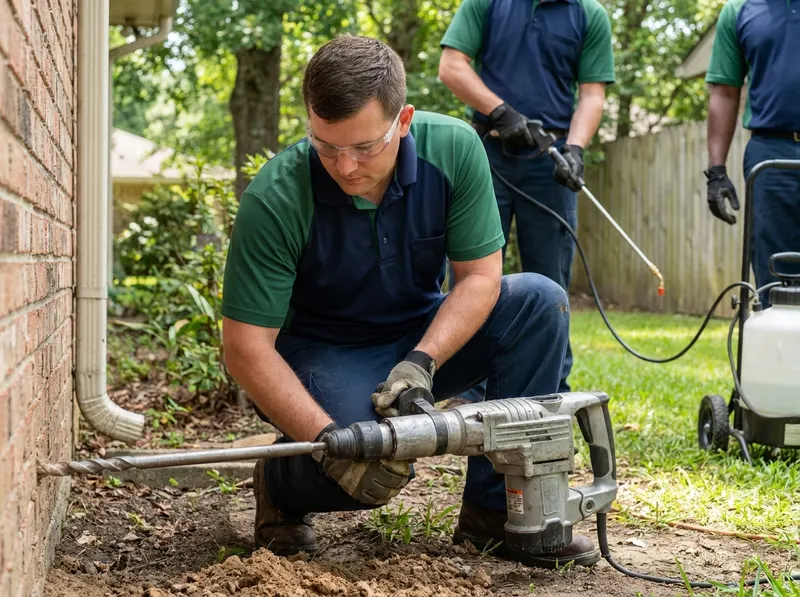
Subterranean termite soil treatments establish a non-repellent liquid chemical barrier into the soil surrounding residential foundations, preventing structural wood consumption by both native and Formosan species. In East Baton Rouge Parish, Formosan subterranean termites nest in massive colonies exceeding several million foragers, nesting in the sub-tropical moisture common to South Louisiana. A proper soil treatment saturates 4 linear gallons of termiticide per 10 linear feet per foot of depth in a 6-inch by 6-inch trench around the perimeter foundation. Termites fail to detect the active agent, passing directly through treated soil and transferring the toxicant throughout the subterranean colony through social grooming and trophallaxis, neutralizing the queen within 30 to 90 days.
Monitored termite baiting stations offer a surface-level alternative, but continuous liquid soil barriers provide immediate defensive containment for homes with active mud tubes along exterior grade. Bait stations require termite foraging discovery and months of consumption before population collapse occurs, which presents significant structural risk when spring alates swarm through Spanish Town and the Garden District. Liquid applications establish an immediate zone of protection. The trade-off is mechanical: soil treatments require concrete drilling every 12 inches through adjacent patios, driveways, and brick porches to access the hidden sub-slab soil line along monolithic slabs or raised chain walls common in Southdowns and Shenandoah.
Slab construction types determine the application process. Monolithic concrete slabs common in Broadmoor require standard exterior trenching combined with targeted expansion-joint drilling. Pier-and-beam foundations found in historical sections require trenching around every single interior brick pier and along the entire internal curtain wall to prevent damp-ground tunneling. Liquid termiticide residual integrity persists in heavy alluvial clay soils for roughly 5 to 10 years, though heavy rainfall along the Mississippi River corridor demands that exterior landscaping beds do not bridge past the treated perimeter grade. Property owners schedule consultations directly via (225) 497-0116 to confirm exact linear measurements and foundation requirements.
Every job gets a firm, written price after a free on-site visit.
Tell us about your subterranean termite soil treatment job in Baton Rouge and we'll send a clear, written quote, usually the same day.
 Cazento Pest Defense