Quarterly perimeter pest defense in Baton Rouge functions as an exterior containment protocol rather than a standard indoor spray service. In sub-tropical regions like East Baton Rouge Parish, intense atmospheric…
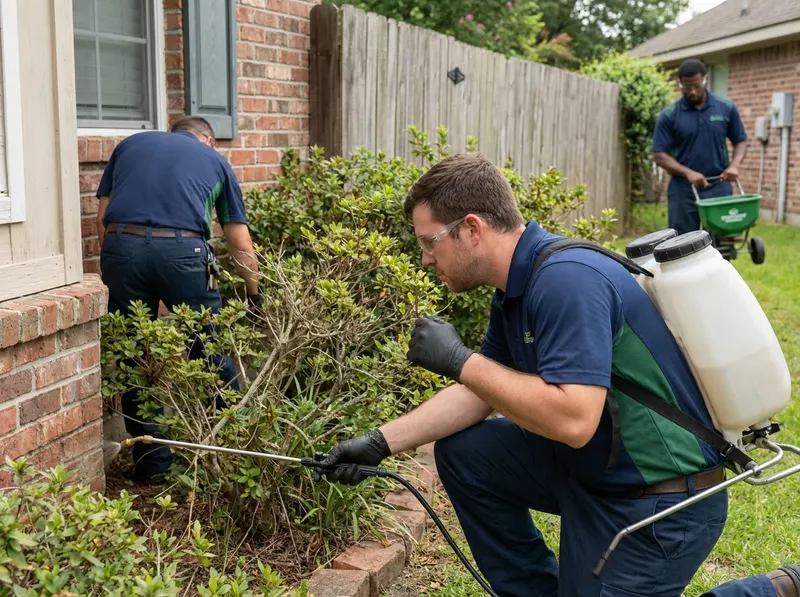
Quarterly perimeter pest defense in Baton Rouge functions as an exterior containment protocol rather than a standard indoor spray service. In sub-tropical regions like East Baton Rouge Parish, intense atmospheric humidity and sudden 2-inch cloudbursts rapidly wash away thin topical surface sprays. Outdoor pest pressure intensifies near bayous and older drainage easements in established neighborhoods like the Garden District and Spanish Town, where large live oaks drop heavy mulch layers that harbor large American roaches. Applying an exterior residual envelope stops these insects at the masonry level. A complete treatment pairs microencapsulated liquid barriers with water-insoluble granular treatments along landscape bed edges. This setup prevents insect transition across the exterior wall plane into expansion joints, soffits, and crawlspace piers.
Decision-fit for this service hinges on the distinction between defensive exterior barriers and reactive indoor treatments. If an infestation consists of food-infesting German cockroaches or structural wood-destroying subterranean termites, perimeter barriers alone are incorrect; German roaches require targeted indoor gel baits and insect growth regulators, while termites require specialized soil-trench termiticide injections under Louisiana regulatory guidelines. However, if the objective is preventing foraging outdoor pests from crossing thresholds during summer heat or fall rains, an exterior protocol is the appropriate choice. The operational trade-off is geographic footprint: perimeter applications treat the exterior structural envelope without requiring technicians inside living areas, but they require consistent maintenance at 90-day intervals because ambient heat and southern exposure degrade active surface chemistries.
Perimeter defense adapts specifically to local residential architecture across Baton Rouge. In slab-on-grade developments throughout Shenandoah, Broadmoor, and Bocage, exterior weep holes along brick veneer provide direct pathways for pests into wall voids. Technicians inject hydrophobic dust formulations into these openings rather than saturating them with wet sprays that damage insulation. In Southdowns, where older crawlspace homes and Pier-and-beam foundations are common, treatment expands outward to protect sub-floor foundation pillars and crawl vents against moisture-seeking perimeter invaders. Maintaining continuous exterior residual barriers keeps insect mortality outside the residence and reduces indoor chemical exposure for occupants.
Every job gets a firm, written price after a free on-site visit.
Tell us about your quarterly perimeter pest defense job in Baton Rouge and we'll send a clear, written quote, usually the same day.
 Cazento Pest Defense