In East Baton Rouge Parish, average annual rainfall exceeding 60 inches creates systemic drainage friction that sustains mosquito reproduction. Water retention across heavy clay soils in Broadmoor and low-elevation…
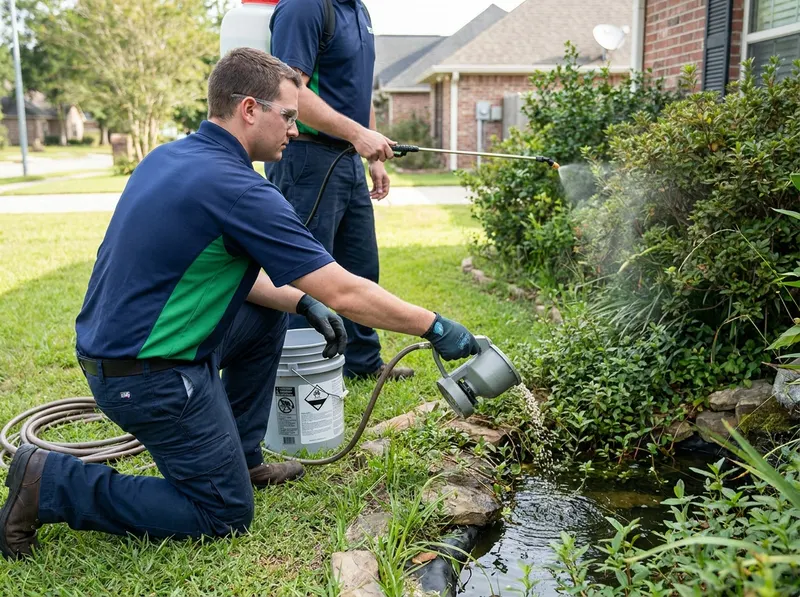
In East Baton Rouge Parish, average annual rainfall exceeding 60 inches creates systemic drainage friction that sustains mosquito reproduction. Water retention across heavy clay soils in Broadmoor and low-elevation lots along Bayou Fountain in Southdowns produces primary breeding sites for Aedes albopictus and Culex quinquefasciatus. Adult mosquitoes rest on the undersides of broadleaf foliage, shaded soffits, and dense ground cover during peak daylight temperatures. A defensive program pairs synthetic pyrethroid or microencapsulated adulticides on perimeter vegetation up to a 10-foot vertical height with biological larvicides applied directly to slow-draining reservoirs.
Microbial larvicides utilize Bacillus thuringiensis israelensis (BTI), an active agent toxic exclusively to dipteran larvae that prevents adult emergence without damaging non-target aquatic organisms or soil chemistry. Dense residential canopies in neighborhoods like the Garden District, Spanish Town, and Bocage retain excessive moisture in non-draining masonry gutters, bird baths, and potted plant saucers. In suburban Shenandoah, retention ponds and ditch networks require sustained-release methoprene briquettes or BTI granules yielding residual control for 30 consecutive days. Step 1 involves identifying and mapping all functional water zones. Step 2 applies residual adulticides to resting surfaces. Step 3 places designated larvicidal controls directly into unavoidable standing water.
A single barrier treatment suits properties hosting outdoor events within a 72-hour window, whereas continuous suppression requires recurring treatments every 21 to 28 days from March through November. The core trade-off centers on environmental durability: heavy downpours can dilute untreated standing water and introduce new egg deposits, while microbial larvicide solid rings remain active through continuous water flow. Every technician operating these systems holds commercial certification through the Louisiana Department of Agriculture and Forestry (LDAF), ensuring chemical compliance and target-specific application without unnecessary indoor broadcast chemical usage.
Every job gets a firm, written price after a free on-site visit.
Tell us about your mosquito reduction and standing-water larvicide job in Baton Rouge and we'll send a clear, written quote, usually the same day.
 Cazento Pest Defense