Thermal bed bug remediation elevates the ambient temperature of enclosed living spaces to lethal thermal thresholds, maintaining 121°F to 135°F for a minimum of 4 continuous hours. This temperature range denatures…
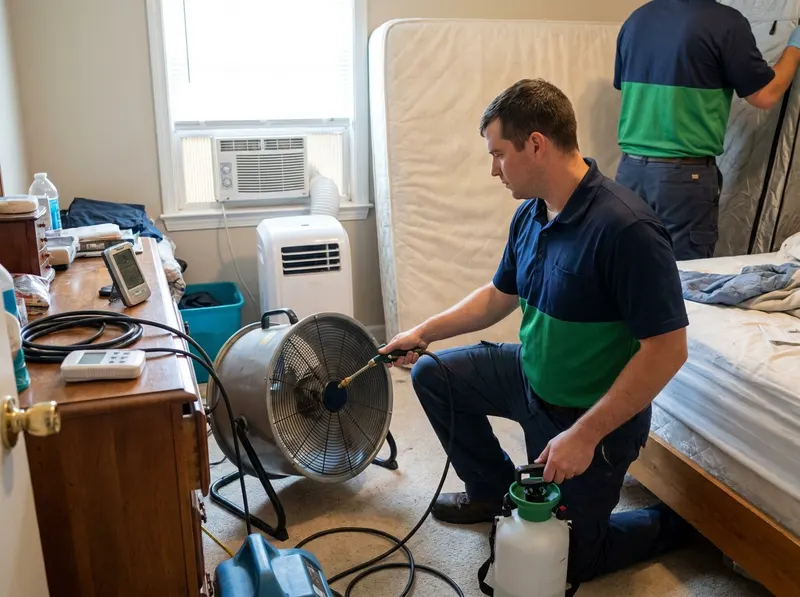
Thermal bed bug remediation elevates the ambient temperature of enclosed living spaces to lethal thermal thresholds, maintaining 121°F to 135°F for a minimum of 4 continuous hours. This temperature range denatures insect proteins and penetrates mattress seams, hollow bed frames, electrical outlets, and baseboard moldings where conventional sprays fail to reach. While thermal convection kills active adults, nymphs, and desiccation-resistant eggs on contact, it leaves zero residual defense once the structure cools back to normal ambient levels. To prevent re-introduction or survival in unheated structural voids, licensed technicians place targeted non-repellent liquid formulations and desiccant dusts inside perimeter baseboards, behind switch plates, and along tack strips. This two-phase combination solves the physiological defense mechanism of bed bugs without relying solely on chemical soakings.
Residential architecture across East Baton Rouge Parish presents specific structural variables that dictate protocol selection. Historic raised cottages in Spanish Town and the Garden District feature suspended wooden floors, lath-and-plaster walls, and high-clearance crawl spaces that allow ambient heat dissipation. These historic structures require supplemental perimeter chemical bands and higher BTU forced-air heating output to sustain core lethal temperatures. Slab-on-grade homes in Shenandoah, Broadmoor, Southdowns, and Bocage retain applied heat more uniformly within interior drywall envelopes, allowing faster thermal saturation. Baton Rouge summer relative humidity regularly exceeds 80%, which slows ambient heat convection; specialized high-volume air movers circulate treated air continuously to eliminate cold spots near concrete foundation perimeters.
Choosing between standalone chemical remediation and integrated thermal-chemical remediation comes down to infestation density and personal item management. Standalone chemical treatment requires 2 to 3 separate site visits spaced 14 days apart to interrupt consecutive egg-hatch cycles, accompanied by extensive laundering and bagged containment by the property owner. The thermal-chemical hybrid protocol achieves complete mortality across all life cycles in a single service execution lasting 6 to 9 hours, though it requires homeowners to remove meltable items including wax candles, pressurized canisters, oil paintings, and sensitive electronics. The operational trade-off pairs higher upfront equipment cost with immediate, single-day eradication and reduced client preparation labor.
1. Structural assessment identifies the exact nesting perimeter and confirms bed bug presence through physical cast skins, fecal staining, or live specimen capture. 2. Homeowners complete a standardized structural clearance checklist, removing heat-sensitive items while keeping infested textiles inside the targeted heating zone. 3. Industrial thermal equipment raises internal room air to lethal ranges between 120°F and 135°F while high-velocity circulation fans prevent thermal stratification. 4. Wall voids, baseboard tracks, and entry thresholds receive precision applications of residual non-repellent insecticides and silica dust to eliminate any insects seeking refuge outside the primary thermal envelope.
Every job gets a firm, written price after a free on-site visit.
Tell us about your bed bug heat and chemical remediation job in Baton Rouge and we'll send a clear, written quote, usually the same day.
 Cazento Pest Defense